Embers in the Shed: The South West Bonfire Crews Who Keep Going After the Last Spark
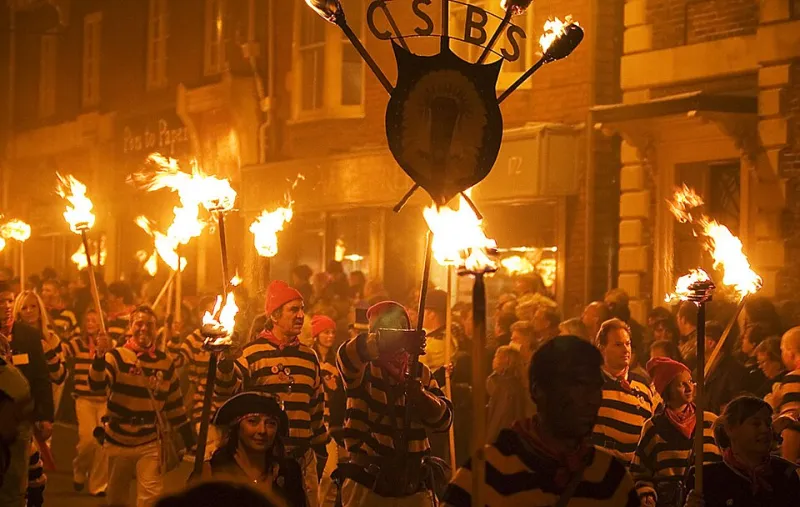
Photo: Unknown, CC BY-SA 2.0, via Wikimedia Commons
By 9 November, the coast path smells of damp ash and the last Catherine wheel has been swept off the village green. The 2026 bonfire season has had its big night. And yet, in sheds from the Somerset Levels to the Devon lanes, the kettle is already on.
Because the South West’s bonfire crews do not really pack up when the rockets stop. They mend costumes, count bucket money, book first-aiders, argue about storage and plan the next supper. The fire is the headline, but the year-round graft is the story.
The morning after the night before
Walk into a bonfire club’s workshop in mid-November and you will not find a gang of people nursing singed eyebrows. You will find a treasurer with a spreadsheet, someone’s uncle repairing a torch bracket, and a tray of sausage rolls doing the rounds. The romance of the tar barrel is real, but so is the public liability insurance.
Take Ottery St Mary in Devon, where the tar barrels are a tradition with deep roots and a serious operational backbone. The famous night is only possible because of months of planning: route checks, crowd management, marshals, first aid, conversations with the council. The same is true across the region. Bridgwater’s carnival clubs spend the year building and painting floats that will be seen for one glorious evening. Shebbear’s boulder tradition is looked after by people who take the long view. Hatherleigh’s carnival crews do the quiet admin that makes the loud bits happen.
That is the first thing to understand about the South West’s fire culture. It is not a few weeks of chaos. It is a calendar.
Pie, mash and the politics of the bucket
Ask anyone who helps run a bonfire society what keeps them going and you will hear the same answer: the suppers. The quiz nights. The raffle where someone wins a ham and everyone pretends not to be jealous.
These are not glamorous events. They are held in village halls with strip lighting and slightly wobbly tables. But they are where the money comes from, and where the crew comes from. A bucket collection on the night is only part of the picture. The rest is built through pie and mash nights, cider-and-cheese evenings, and the annual general meeting that everyone swears will be quick and never is.
There is also the friendly rivalry. Villages compare takings. Carnival clubs compare float finishes. Crews pretend not to care about the other lot’s fireworks display, then quietly ask who did their bangers. It is competitive in the way that village cricket is competitive: outwardly polite, inwardly ferocious.
What newcomers actually do
If you have ever watched a tar barrel race and thought “I’d like a bit of that”, you do not need to start by carrying a flaming barrel through a crowded street. In fact, please don’t.
Bonfire clubs need marshals, bucket collectors, tea-makers, van drivers, costume sewers, social media wranglers and people who are good at filling in forms. They need someone to stand at the end of a lane with a hi-vis and a cheerful word. They need someone to help take the float apart in January.
How do you join? Look for notices in village halls, post office windows and local Facebook groups. Turn up to an AGM. Offer to help at a fundraiser. Bring a friend. The South West’s bonfire crews are not secret societies, but they are busy ones, and they are always short of a pair of hands.
The 2026 season still has a tail. Somerset’s carnival circuit often rolls through November, and winter suppers and club open evenings continue into December. If you want to watch, check local carnival websites and parish noticeboards, stand behind the barriers, and listen to the marshals. If you want to join, ask what needs doing in the shed.
Why the embers matter
There is a temptation to get misty-eyed about all this. Fire, community, winter, togetherness — it writes itself. But the more interesting truth is practical. The South West does not hibernate after the clocks go back. It organises.
These crews keep the region’s winter identity alight: not just with flames, but with fundraisers, repair jobs, shared meals and the low-level, year-round sociability that makes a village feel like a village. The fire is the excuse. The rest is the point.
So if you see a bucket being rattled outside a pub this month, drop in a pound. If you see a shed light on and a smell of paint and paraffin, knock. They might be busy. They will almost certainly put the kettle on.