Ropes, Rhythm and a Round After: Why South West Church Towers Are Filling Up Again
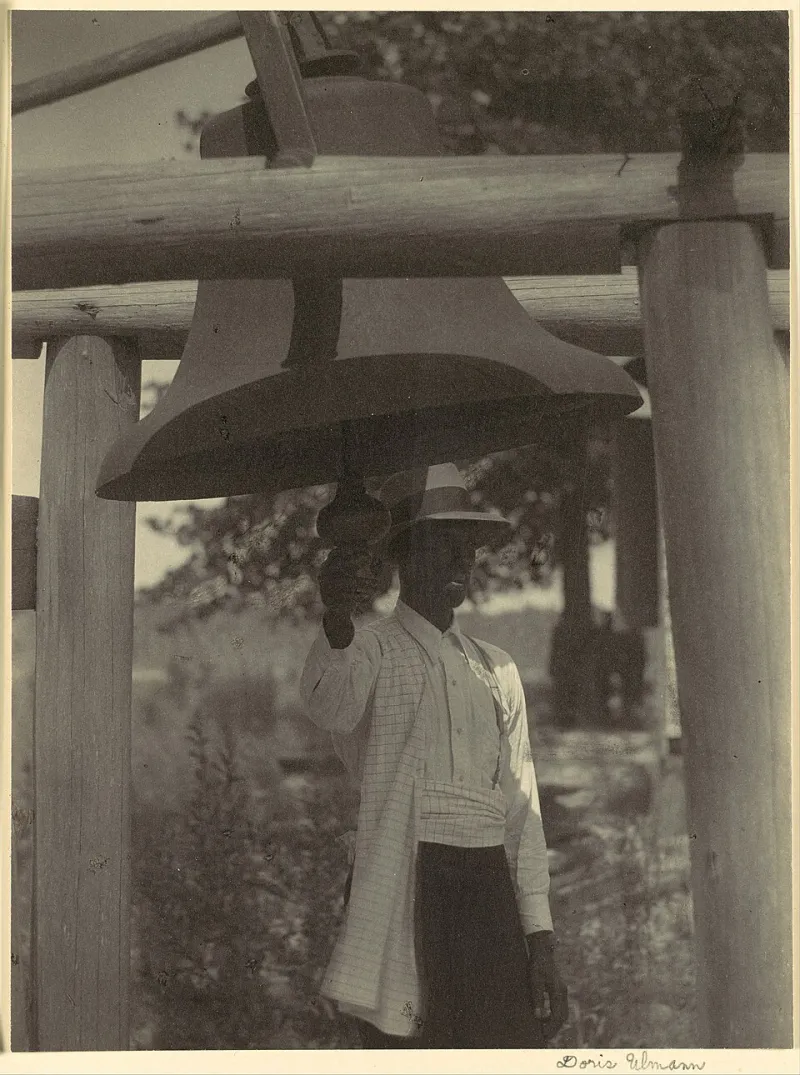
Photo: Doris Ulmann, CC0, via Wikimedia Commons
On a damp Tuesday in November, the streets around a parish church in Devon are doing their usual after-dark impression of a ghost town. Up a spiral staircase, though, the tower is coming to life. Eight ropes hang through the ceiling. A kettle is clicking off. Someone is arguing, very politely, about whether the treble is too sharp. Then a voice calls: “Look to, treble’s going, she’s gone.”
And the bells start.
This is not a concert. Nobody is wearing evening dress. The sound is uneven, then suddenly tidy, then uneven again. A teenager in a hoodie is ringing next to a retired teacher, who is ringing next to a bloke who has clearly been drafted in from the pub. It is deeply local, mildly athletic and — this is the bit that tends to surprise people — surprisingly social. Across the South West, church towers are quietly filling up again, and many of them are looking for beginners before the Christmas rush of carol services, midnight masses and watchnight services in 2026.
The tower as a front room
Bell-ringing has a reputation problem in some quarters. People hear “campanology” and picture a dusty hobby for people who already know what a bobsleigh is. In practice, a good practice night feels more like a village front room with a very high ceiling. There is tea. There is banter. There is someone patiently explaining what you did wrong, and someone else patiently explaining that they did exactly the same thing for six months.
What draws people in is the combination. It is a puzzle, a bit of exercise, a heritage skill and a reason to leave the house on a dark evening. You do not need to read music. You do not need to be especially strong. You do need to listen, to concentrate and to accept that your first go will sound like a sack of spanners falling down a staircase. That is normal. That is, in fact, the shared experience that makes the post-practice pint taste so good.
Why the ropes are pulling people back
The revival is not one big national campaign. It is lots of small local things happening at once. Younger ringers have drifted in through university societies, folk music circles and the simple fact that a tower is a warm room with a free hobby attached. Lapsed ringers who last touched a rope in their teens have been tempted back by a friend, a poster in a church porch or a vague memory of enjoying it. Complete beginners are turning up to taster sessions with no idea what a “sally” is and leaving with a new Tuesday-night habit.
Ahead of Christmas 2026, towers from Cornwall to Wiltshire are especially keen. The festive season is the busiest stretch of the ringing year, with services that need bells before, during and after. That means more hands are welcome. It also means taster sessions are happening now, while there is still time to learn enough to join in — or at least enough to stand in the right place and look purposeful.
What actually happens on a practice night
Most towers run a weekly practice, usually in the evening. You arrive, say hello, and climb up. The first lesson is not about music. It is about handling a rope safely: how to stand, how to pull, how to let the rope run through your hands without letting go altogether. A tower captain or experienced ringer will stay with you. You will probably start on a dumb bell or with the rope tied off, then move on to rounds — ringing in a simple sequence, one bell after another.
From there come call changes, where the person calling tells you when to swap places in the order, and then the mysterious world of methods, which is essentially pattern-memory at speed. You do not have to understand it all on night one. Most people do not. The point is to turn up, listen and have a go. The tower will have its characters: the one who brings biscuits, the one who corrects your posture, the one who has been ringing for forty years and still gets a bit nervous before a wedding.
What to wear, and what to bring
Practicality beats performance. Wear layers, because towers can be cold on the stairs and warm once you are ringing. Flat, secure shoes are sensible. Avoid loose scarves, dangling sleeves or anything that could catch on a rope. Take off rings and bracelets before you start. Bring a water bottle and, if you are the sort of person who likes to be prepared, a small torch for the stairwell.
You do not need to bring gloves, muscles or prior knowledge. You do need to contact the tower before turning up, so someone knows to expect you and can make sure there is an experienced ringer free to teach. Most towers ask for a small contribution towards running costs, but ringing is generally one of the cheapest hobbies you can find. Where else do you get a weekly workout, a history lesson and a social life for the price of a cup of tea?
The pub is part of the method
Ask any ringer what happens after practice and the answer comes quickly: the pub. Sometimes it is a proper session. Sometimes it is a quick half and a packet of crisps. Either way, it is not an add-on. It is where the debrief happens, where the new person gets properly welcomed, and where the tower’s real business — friendships, lifts home, gossip, plans for Christmas — gets done.
The post-practice pub trip is also a useful reality check. Bell-ringing is not a performance for an audience. It is a community activity that happens to make a magnificent noise. The ringing stops at nine. The conversation does not. If you are nervous about walking into a tower, the promise of a pint afterwards is a decent incentive.
Where to start in the South West
You do not have to travel far. Towers in Cornwall, Devon, Somerset, Dorset, Wiltshire and Gloucestershire all run practice nights, and many are actively recruiting. Start with the church nearest you, check the parish newsletter or website, or look up your local bell-ringing association. If you are in a city, try a central tower; if you are in a village, try the one you can hear on a Sunday. Taster sessions are often advertised in the run-up to Christmas, but most towers will happily arrange one outside those dates too.
Go once. Climb the stairs. Stand at the back. Watch. Then, when someone offers you a rope, take it. The first pull will feel strange. The second will feel stranger. By the fourth, you will be part of the rhythm — and by the time you are in the pub, you will already be planning to come back.